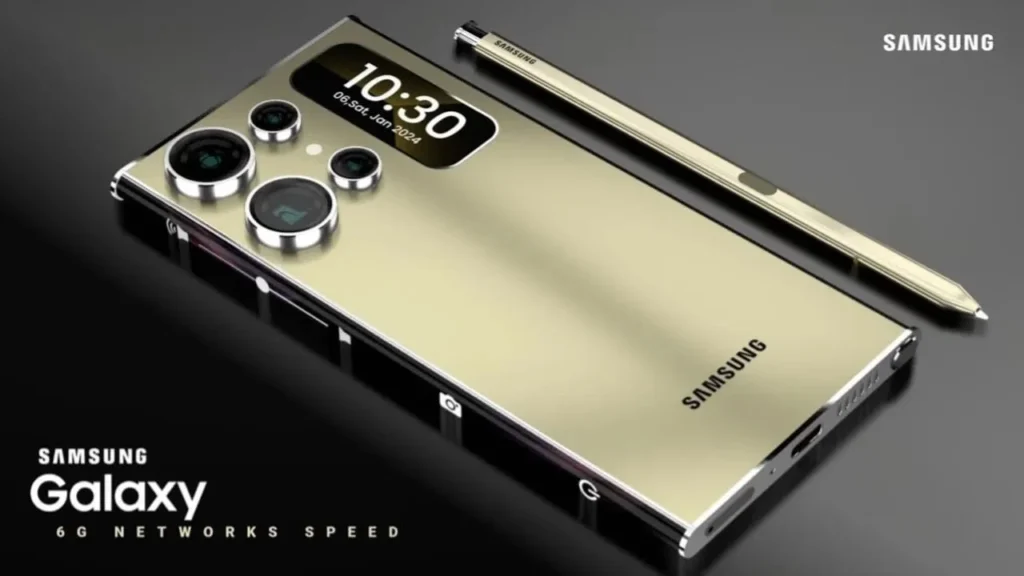

Samsung Galaxy S26 Ultra: 6G-Ready AI Flagship with 400MP Camera, Massive 4TB Storage & 9000mAh Battery
We’ve all seen the crazy rumours flying around. You hear numbers like 6G, 400MP camera, and 4TB of storage and you think, “That’s just for sci-fi movies, right?” What if Samsung is actually planning to build it?
The Samsung Galaxy S26 Ultra, based on the whispers and leaks, isn’t just an upgrade. It’s a giant leap. If even half of what people are saying is true, this phone could change everything we expect from a smartphone. But what’s real, and what’s just a dream?
| Feature | Rumoured Specification |
|---|---|
| Network | 6G-Ready (World’s First?) |
| Main Camera | 400MP Super-Resolution Sensor |
| Storage | Up to a mind-blowing 4TB |
| Battery | 9000mAh with Hyper-Fast Charging |
| Display | 6.9-inch Dynamic AMOLED, 200Hz Refresh Rate |
| Processor | Snapdragon 8 Gen 4 (or Galaxy-exclusive AI Chip) |
| AI Features | Deep-level On-Device AI for everything |
| Expected Launch | Early 2026 |
| Estimated Price | Very, Very High |
The 6G Revolution: What Does “Ready” Really Mean?
“6G-ready” is the biggest headline. While true, global 6G networks won’t be widespread for years after the phone’s launch, having a 6G-ready device is like having a car that can drive 300 mph on roads with a 70 mph limit. It’s about future-proofing.
-
What it could enable: Imagine downloading a full 8K movie in one second. Think of instant, lag-free holographic video calls where the person seems to be in the room with you. It could power real-time AI that interacts with the world through your camera instantly. It’s not just faster internet; it’s the foundation for tech we haven’t fully imagined yet.
-
The reality check: For the first year or two, you’ll mostly use it on super-fast 5G networks. The S26 Ultra would be laying the groundwork for the next decade of connectivity.
The 400MP Camera: Beyond Human Sight
A 400MP sensor sounds impossible. The goal here isn’t just to print billboard-sized photos. It’s about capturing insane detail so that AI and software can work magic.
-
How you’d use it: You could take a photo of a city skyline and zoom in to clearly read a street sign half a mile away. In low light, the sensor could combine pixels to create ultra-bright, noise-free 50MP shots. The AI could use all that data to perfectly recreate blurred backgrounds or remove unwanted objects without a trace.

-
The challenge: File sizes would be enormous. This is where that massive 4TB storage and next-gen processing power come in. This camera wouldn’t just take photos; it would collect visual data for the AI to analyse and enhance in real-time.
4TB Storage & 9000mAh Battery: No More Compromises
These two specs solve the biggest headaches in modern phones: running out of space and running out of power.
-
4TB Storage: This is more than most laptops. You could store over 1 million high-quality photos, 800+ HD movies, and your entire app library without a second thought. It makes the idea of cloud storage subscriptions for space almost unnecessary. Content creators, 8K videographers, and mobile gamers would never worry again.
-
9000mAh Battery: Paired with a more efficient processor and display, this could mean 3-4 days of heavy use on a single charge. For normal users, a week of battery life could become normal. It would finally end “battery anxiety” for good. The big question is weight and charging speed—can Samsung make it feel light and charge it quickly?The AI Brain: It’s Not Just a Feature, It’s the OS
With the S26 Ultra, AI won’t be a tool you open. It will be the brain of the phone. We’re talking about on-device AI so powerful it could:
-
Write entire emails or reports based on a one-sentence prompt from you.
-
Edit videos by you just describing what you want.
-
Translate live conversations in real-time with perfect tone and accent.
-
Manage your phone’s health, battery, and security proactively, learning your patterns perfectly.

The processor needed for this, likely a custom Samsung “Galaxy AI” chip or a super-powered Snapdragon, would be the most powerful ever put in a phone.
Frequently Asked Questions (FAQs)
1. Will the Samsung Galaxy S26 Ultra really have 6G?
It is very likely to have the hardware capable of connecting to future 6G networks. However, widespread 6G service for consumers probably won’t be available until the late 2020s.
2. Is a 400MP camera better than a 50MP one?
It’s more complex. A larger, high-resolution sensor captures vastly more detail and light data. This gives AI software incredible material to work with, enabling lossless zoom, incredible low-light shots, and professional-grade editing flexibility that a 50MP sensor can’t match.
3. Who needs 4TB of storage on a phone?
While overkill for most, it’s a game-changer for professionals: 8K videographers, photographers who shoot in raw format, developers, and users who want their entire media library offline. It makes the phone a true primary computer.
4. How much will the S26 Ultra cost?
If these specs are real, the price will be unprecedented. The top model with 4TB could easily exceed $2,000 / ₹2,00,000+, making it a niche, ultra-premium device.
5. When will it be launched?
Following Samsung’s usual schedule, the Galaxy S26 series, including the Ultra, is expected to be announced in January or February of 2026.
Final Verdict
The Samsung Galaxy S26 Ultra, as rumoured, isn’t just a new phone. It’s a concept car made real. It pushes every boundary: connectivity, imaging, storage, and intelligence.
For the average person, it will likely be overkill and prohibitively expensive. But its importance can’t be understated. Like the first 5G phone or the first folding phone, the technologies pioneered in the S26 Ultra will trickle down to become the standard in future, more affordable models.
It’s a phone for early adopters, tech visionaries, and professionals for whom a smartphone is their most critical tool. It shows us that the future of mobile technology is about removing limits—on data, on power, on creativity, and on what we think is possible. The S26 Ultra might just be the device that turns that future into today.